


Boat shade prices vary widely depending on the type of system, the size and layout of the boat, the amount of coverage desired, and the materials used.
A basic portable shade may cost a few hundred dollars. A complete custom system built for regular use on a center console or similar boat will usually cost considerably more because it includes the shade, structural poles, marine hardware, fitting, and the engineering needed to make the system work correctly on that boat.
For Blackstick systems, current starting prices are approximately:
- 2-stick bow shade: starting at $2,000
- 2-stick stern shade: starting at $2,000
- 4-stick bow shade: typically starting around $2,800–$3,000, depending on configuration and coverage
- Rocket Shade: starting around $2,000, depending on boat size and configuration
Bow and stern shade packages may also qualify for package pricing when both systems are purchased together.
Prices are subject to change, and unusual boat layouts, oversized coverage areas, or more complex configurations may affect the final price.
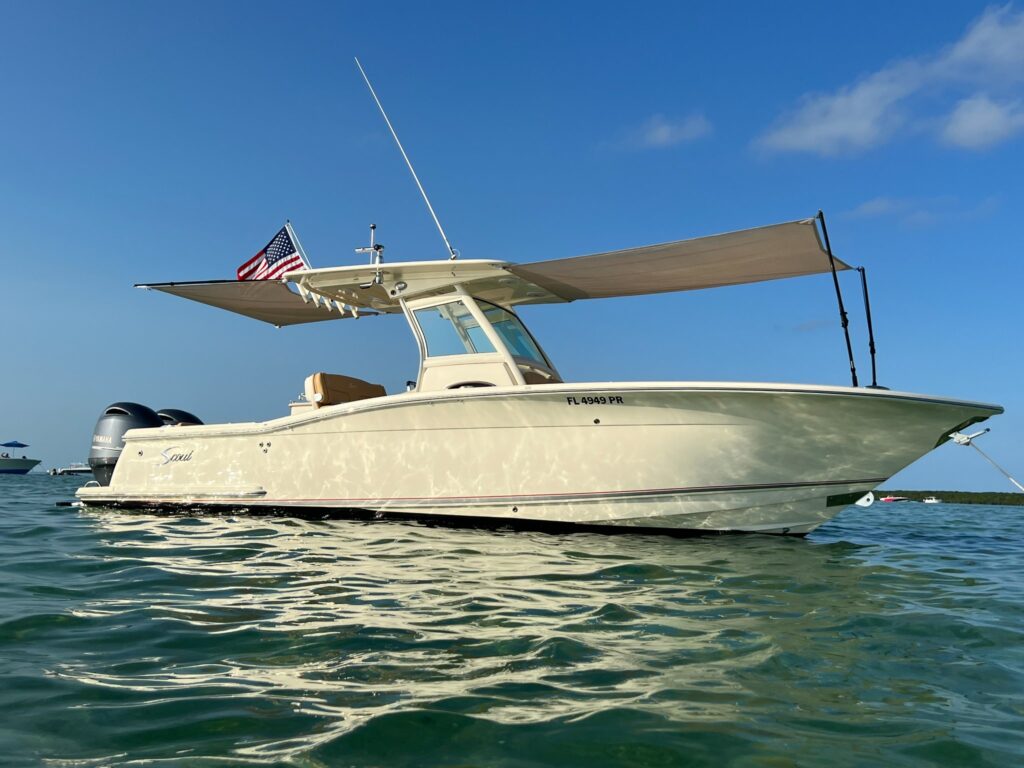
What “Boat Shade” Actually Means
The phrase “boat shade” can describe very different products.
At one end are portable umbrellas, clamp-on shades, and inexpensive universal canopies. These can be useful for occasional shade at the sandbar or while anchored.
At the other end are custom or semi-custom systems designed around a specific boat. These typically use more durable marine materials, dedicated mounting points, structural poles, and shade patterns sized to the boat.
The price difference reflects much more than the fabric itself.
What Drives the Price of a Boat Shade?
Number of poles
The number of structural poles is one of the biggest cost drivers in a pole-supported shade system.
A larger shade may require additional poles to properly support the fabric and manage the load placed on the system. More poles mean more carbon fiber, hardware, labor, and manufacturing time.
Boat layout and rod-holder placement
Boat length matters, but there is no single boat-length cutoff that determines whether a shade should use two poles or four.
Rod-holder placement, desired coverage, shade geometry, mounting locations, and the size of the fabric area all affect the correct configuration.
Two boats of similar length may require completely different shade systems depending on how they are laid out.
Amount of coverage
A small stern shade requires less material than a large bow or full-coverage system.
As the shaded area grows, so does the amount of fabric, structural support, and labor involved.
Fabric and hardware
Marine shade systems live in a harsh environment. Sun, salt, wind, vibration, and repeated setup all put stress on the materials.
Blackstick uses perforated marine shade fabric, carbon-fiber poles, and marine-grade hardware rather than treating the shade as simply a piece of fabric stretched over the boat.
Custom fitting
Custom fit also adds cost.
The system has to work with the boat’s existing hardtop, rod holders, electronics, lights, speakers, outriggers, railings, and other equipment.
The goal is not simply to create shade. It is to create useful shade that fits the boat cleanly and is easy enough to use regularly.
What Is Included in a Blackstick Shade System?
A complete Blackstick system includes the shade, Blackstick’s handmade carbon-fiber poles, the required mounting hardware, storage bags, and the appropriate setup for the boat.
For local custom projects, Blackstick can handle the measurement and fitting process directly.
For customers outside the local service area, certain systems can be completed using a remote measurement or standardized sizing process.
The exact process depends on the product and the boat.
Why Does a Custom Boat Shade Cost More Than a Portable Shade?
There are less expensive ways to put shade on a boat.
A portable canopy or umbrella may make perfect sense for someone who only needs occasional shade while anchored.
A custom system is aimed at a different customer: someone who wants a shade that fits the boat, stores compactly, uses quality marine components, and is quick enough to deploy that it actually gets used.
Blackstick manufactures its carbon-fiber poles in-house and builds the shade system around the boat rather than asking the boat owner to adapt to a universal product.
Many two-stick Blackstick systems can be deployed in under a minute under normal conditions, while larger systems take slightly longer.
When a Custom System May Not Be the Best Choice
A full custom shade does not make sense for every boat or every owner.
On very small boats, or for someone who only wants occasional shade while anchored, a simpler portable option may be more practical and less expensive.
The right choice depends on how often the shade will be used, where the boat operates, and which shade system makes the most sense for your boat.
Frequently Asked Questions
Does the price include installation?
It depends on the boat and the customer’s location.
Local custom projects can include measurement and setup by Blackstick. Customers outside the local service area may use a remote measurement process or receive a standardized system designed for customer setup.
How many poles will my boat need?
There is no universal length rule.
The number of poles depends on the desired coverage, rod-holder placement, boat geometry, and the load created by the shade.
Many systems use two or four poles, but the correct configuration is determined by the boat rather than a single length measurement.
Will a cheaper shade last as long?
Price alone does not determine lifespan.
Materials, hardware, fit, storage, exposure to sun and salt, and how the shade is used all affect service life. When comparing systems, it is worth looking beyond the initial price and asking what materials are being used and how the system is supported.
Are these prices fixed?
No. They are current starting points and are subject to change.
Final pricing is confirmed after the boat and desired configuration are understood.
Next Step
If you want to know what shade system makes sense for your boat, request pricing for your boat with the make, model, length, and the area you want shaded.
That is usually enough for Blackstick to recommend a configuration and provide a realistic starting price.